
The Evolution of Dentistry Throughout History
The consequences of dental disease have plagued humanity throughout history. Our ancestors relied on the tools and treatments available to them and applied available treatment methods based on their understanding. While our forefathers may not have understood the cause of their dental pain, they did find ways to alleviate their discomfort, fight infection, and restore the function of their teeth.
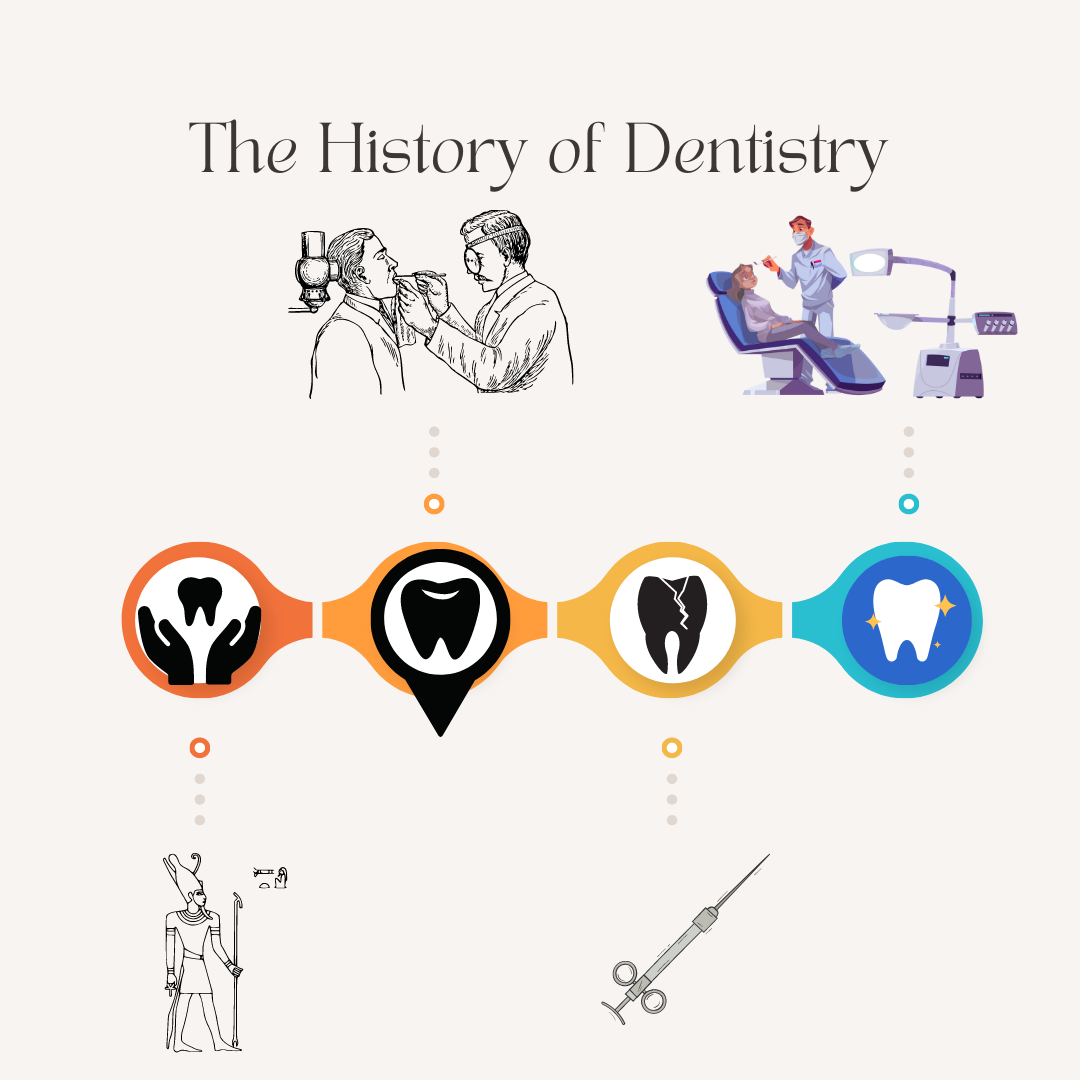
What is Dentistry?
Dentistry is a branch of healthcare that focuses on the mouth, including the teeth and gums. It consists of diagnosing, studying, preventing, and managing the conditions, disorders, and diseases of the mouth. Today, dentists are professionals in the field of medicine, and there are also specialists who practice within the field, including orthodontists and oral surgeons.
Tooth Decay in the Ancient World
The most common understanding of tooth decay throughout much of human existence was that it was caused by worms burrowing holes through a tooth's enamel and into the core of the tooth. Although this sounds strange to modern readers, it made sense to people in the past because they watched worms do this exact thing to wood. Greek philosophers wrote about the worm theory, as did writers from Japan, Egypt, India, and China. Around the world, different civilizations tried to ways to remove the worms and save the teeth. Herbs were often applied to the infected teeth. People tried pulling the diseased teeth or filling the holes with various types of compounds. Although they didn't understand correctly what caused tooth decay, their attempts at dental treatments were simply primitive attempts at today's common treatments.
Ancient Dentistry Practices
There's evidence of people from Pakistan drilling into damaged teeth around 9000 years ago. Toothbrushes weren't invented until much later, but early civilizations understood that dental care was important and would clean the teeth. Often they did this by chewing on wood. Other cultural groups scaled teeth using animal bones. Egyptians used recipes for treatments of oral health issues. These recipes aimed to relieve pain and reduce inflammation. There's even a recipe for a tooth filler that's not unlike what is still used today to fill cavities. Early dentists in ancient Egypt even crafted early versions of bridges to replace lost or missing teeth. Hesi-Re, an Egyptian doctor, wrote about periodontal disease and is considered the first person to recognize what it was and the danger it posed to humans.
Dental Practices of the Middle Ages
There are a lot of misconceptions about what teeth and dental care were like in the medieval period. There's archeological evidence that people living in the Middle Ages cleaned their teeth with early versions of both toothpaste and mouthwash. Decaying or unhealthy teeth were treated with home remedies usually, but there was also professional help available. Barber surgeons cut hair, pulled teeth, applied leeches to cure diseases, and carried out simple surgeries. Today, gleaming white and even teeth are a sign of wealth. Back then, though, it was poor people who often had better teeth simply because they ate less sugar than their wealthy peers. Overall, people actually had healthier teeth during the Middle Ages than people have today! Examinations of skeletons show that only about 20% of people had tooth decay, versus 90% of people living in modern times. Along with ways to clean teeth, people practicing dentistry during this period had also developed methods to whiten teeth and knew how to pull decayed teeth. Clove oil was used to treat bad teeth, and people were given opium when teeth caused them significant pain.
New Tools in the Age of Enlightenment
By the middle of the 18th century, many procedures that are still quite common today were being offered. These included crowns, dentures, and even root canals! People practicing dental care attempted to make crowns, which were usually made of gold, look as much like the patient's real teeth as possible. The first President of the United States, George Washington, is famous in part because of his dentures. Although legend has it that there were made of wood, in reality, they were made of human teeth, ivory, bone, screws, and metal wire. Some of his dentures are still on display at Mount Vernon and show the relative sophistication of denture-making in the 18th century. The famous American rebel Paul Revere, who made the midnight ride to Lexington, was also a dentist and made dentures and tooth prosthetics.
The Foundation of Modern Dentistry
Twenty-six dentists assembled in New York in 1959 and founded the American Dental Association or ADA. One of their goals was to professionalize the practice of dental health. By this time, the field had developed many modern techniques. Ether was now used as anesthesia for dental surgeries. The x-ray was coming into use. Many new people joined the ranks of dental professionals. In 1866, Lucy Beaman Hobbs was the first woman to ever graduate from a dental school in the United States. Three years later, Robert Tanner Freeman was the first African-American person to obtain a dental degree and begin practicing dentistry.
Advances in Hygiene and Cosmetic Dentistry
The invention of Novocain at the turn of the 20th century meant a lot of painful dental procedures were now much less so. The first dental hygiene school opened in 1913 and changed how dental cleanings were carried out. Another huge step forward was when fluoride was introduced into public water supplies starting in the 1940s. Drills had been used for thousands of years, but a high-speed drill was invented in 1957 which makes the use of the tool faster and more bearable for the patient having a tooth drilled. The first dental laser was used in the 1960s. By 1989, the first at-home tooth-whitening kits were offered for sale. As the twenty-first century dawned, dental care focused more than ever on aesthetics and getting veneers became a widespread option offered by many dentists.
- History of Dentistry
- Technology in Dentistry, Through the Ages
- Ancient Dentistry
- The History of the Dental Profession from Ancient Origins to the Modern Day (PDF)
- Ancient History Of Dentistry
- Dentists in the Ancient World
- Jewel-Capped Teeth and Golden Bridges: 14,000 Years of Dentistry
- The Ancient Romans Had Healthier Smiles Than We Do Today
- Dental Treatment in Medieval England
- Medieval Dentistry
- Oral Health and Frailty in the Medieval English Cemetery of St. Mary Graces
- What Was Dental Hygiene Like During the Middle Ages?
- Brace Yourself for the Painful and Terrifying History of Early Dentistry
- Medicine in the Middle Ages
- Diet and Dental Caries in Post-Medieval London
- Eighteenth-Century Advances in Dentistry
- The Trouble with Teeth
- Oral Surgery
- Paul Revere, America's First Dental Odontologist
- The Grand Old Man of Dentistry
- The Father of Modern Dentistry - Dr. Greene Vardiman Black(1836-1915)
- Oral Care
Ready to book an appointment?
Book a consultation today or make an appointment using our convenient online appointment scheduler.
Book appointment

Enjoy the flexibility of paying through monthly payments.
CareCredit is a healthcare credit card designed for your health and wellness.
Learn more